Engineering
The Embedded Lakehouse Concurrency Trap: Managing Scaling Limits in In-Process Analytics
Startups adopt DuckDB and Parquet on S3 to cut data warehouse costs, but embedded stacks encounter operational limits around multi-writer concurrency, transactional isolation, and compaction.
August 31, 2026 · Engineering · Leon Liang
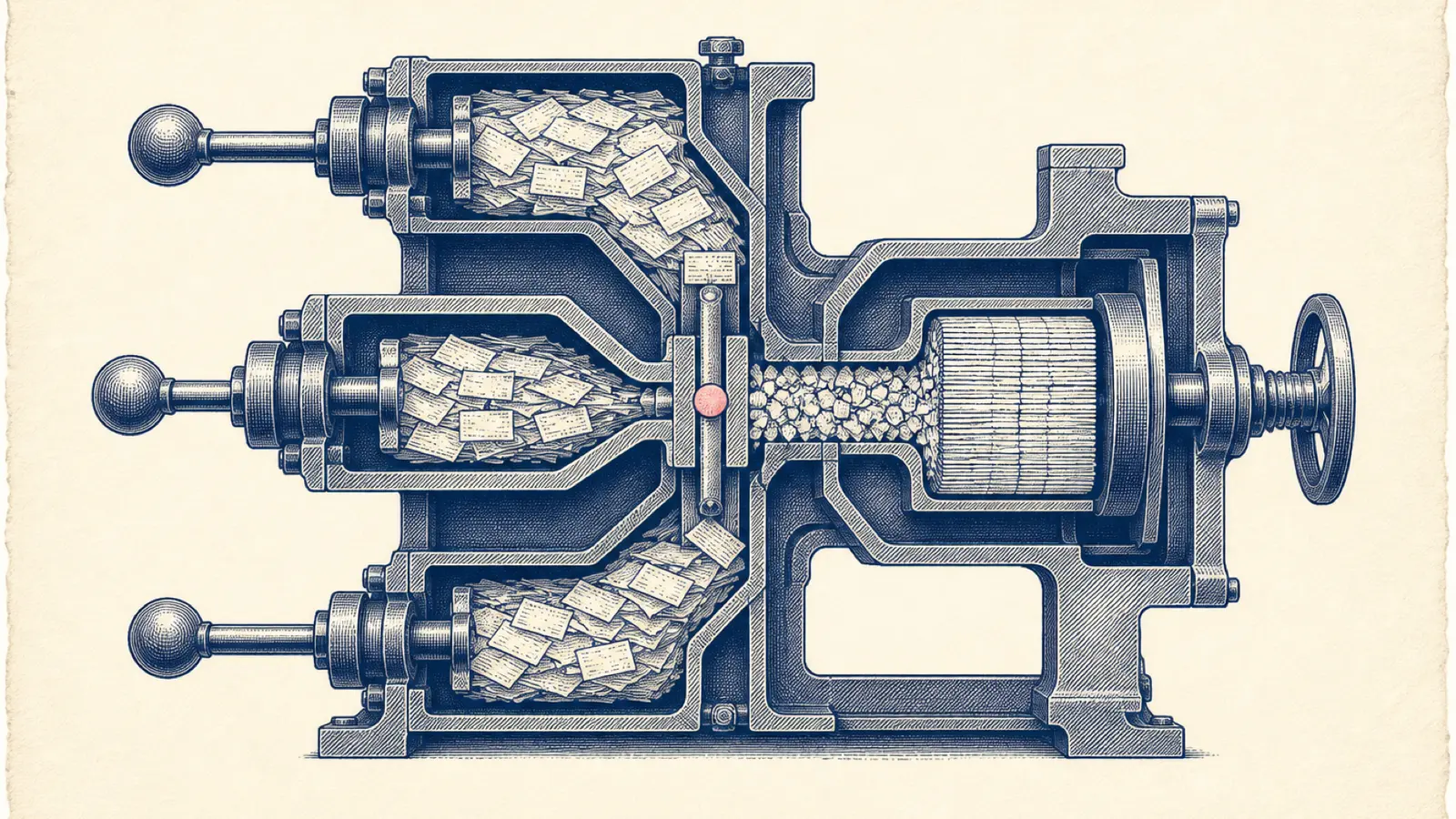
Misconception: Engineering teams frequently assume that total dataset size in gigabytes represents the primary operational limit for in-process analytical engines, believing that as long as files fit within single-node memory or object storage bandwidth, an embedded engine can permanently replace a dedicated cloud warehouse.
Correction: In-process analytical architectures break down not on data volume, but on write concurrency, transactional isolation, and small-file compaction thrashing. When multiple writers compete for object store prefixes, the operational burden shifts from paying a managed warehouse invoice to building and maintaining an ad-hoc distributed storage coordinator.
The Economics of In-Process Query Engines
Startups and scale-ups are replacing heavy, always-on cloud data warehouses with in-process, embedded analytical engines like DuckDB, which reached 1.0+ production stability. Teams build lightweight Medallion architectures querying Parquet files on object storage such as Amazon S3 and Google Cloud Storage with dbt and Apache Arrow. In these setups, organizations report infrastructure cost reductions of up to 80% while enabling fast, localized data preprocessing for AI pipelines.
In-process engines operate effectively for single-node vertical scaling and direct object-store queries. By executing directly inside application processes or lightweight worker nodes, these engines avoid the idle compute costs and network overhead associated with traditional warehouse clusters.
The Concurrency and Multi-Writer Wall
Operational friction emerges when data environments grow in write complexity. In-process engines are designed for single-node vertical scaling and object-store queries; petabyte-scale distributed workloads or extreme multi-tenant concurrency still require distributed query engines.
The primary architectural bottleneck occurs when multiple pipeline stages or ingestion workers attempt concurrent writes to the same object storage prefixes. Because raw Parquet files on object storage lack native atomic transaction coordinators, simultaneous updates create write conflicts, partition overwrite risks, and thousands of fragmented small files. Without automated compaction services, query performance degrades rapidly, forcing engineering teams to construct custom locking and compaction logic.
Decoupling Storage and Compute with Open Table Catalogs
To resolve transactional concurrency and multi-engine access without reverting to proprietary database lock-in, data platforms have rapidly converged on Apache Iceberg and its REST Catalog specification as the de facto open table standard.
Major ecosystem providers have open-sourced their metadata layers to support this standard. Databricks open-sourced Unity Catalog under the LF AI & Data Foundation with GA Iceberg support in 2026, while Snowflake open-sourced Apache Polaris Catalog. This architectural shift decouples compute engines, such as Spark, Trino, DuckDB, and Snowflake, from underlying storage, enabling startups and scale-ups to implement multi-engine lakehouses without vendor lock-in.
However, architecture teams must evaluate operational nuances when selecting catalog layers. While catalog APIs and governance interfaces are open-sourced under standard licenses, vendors often maintain proprietary performance enhancements and managed engine optimizations on their hosted platforms.
Shifting Reliability Left with Contracts and Asset-Aware Orchestration
Storage standards solve file-level ACID transactions, but broader platform reliability depends on upstream data quality and orchestration discipline. To prevent pipeline disruptions and downstream schema breakage, data teams are adopting a shift-left approach by codifying machine-readable Data Contracts, defining schema, freshness SLAs, and semantic rules, directly into CI/CD pipelines.
Data observability tools utilizing standards like OpenLineage provide complementary runtime monitoring. Gartner projects that 50% of enterprises with distributed data architectures will adopt dedicated data observability by end of 2026, driven by the need to prevent autonomous AI agents from acting on corrupted inputs. Even so, organizational hurdles persist; cross-functional alignment between application software engineers as data producers and data engineers as data consumers remains a cultural challenge when enforcing contract ownership.
At the orchestration tier, workflow engines have evolved to support these data assets directly. Pipeline orchestration has transformed from task-centric DAG execution to asset-centric, data-aware orchestration. Apache Airflow 3 introduced native asset-aware scheduling, DAG versioning, and human-in-the-loop controls for GenAI workflows, aligning with the asset-based paradigm popularized by Dagster. This architecture provides automatic data freshness tracking, lineage capture, and proactive drift detection for production ML and RAG pipelines. Migrating legacy task-based pipelines to asset-aware paradigms requires refactoring orchestration workflows, and teams must monitor ongoing tool consolidation, including the acquisition of Dagster Labs by Prefect in 2026.
Multimodal Scaling Beyond Standard Tabular Formats
Modern lakehouse architectures must also accommodate non-tabular, unstructured data required by machine learning applications. AI/ML data infrastructure is shifting from standalone vector databases to unified multimodal data lakehouses built on modern columnar storage formats like Lance and LanceDB (Lance format v2).
Lance enables sub-millisecond random access and high-throughput streaming directly into machine learning training workflows without data duplication, supporting unified vector search, full-text search, and SQL filtering at 10B+ scale for unstructured text, audio, and visual data. Implementing these formats requires careful resource management, as multimodal data pipelines and indexing strategies are rapidly iterating; teams must tune indexing and quantization to balance latency against memory overhead for high-dimensional vectors.
Architectural Guidance for Scaling Lakehouses
Aeolus Data Solutions view. In-process analytical engines provide significant value for local data transformations, staging environments, and single-node AI preprocessing. However, deploying embedded engines against unmanaged Parquet files in multi-writer production environments introduces hidden engineering debt. Aeolus Data Solutions advises engineering teams to separate query execution from storage governance by adopting open table formats with REST catalogs, enforcing shift-left data contracts in CI/CD, and implementing asset-aware orchestration.
Engineering leaders designing modern data lakehouses or evaluating the boundary between in-process analytics and managed storage can contact Aeolus Data Solutions to discuss platform architecture, pipeline reliability, and AI data readiness.
Want a second opinion on your data stack?
Every Aeolus engagement starts with a fixed-fee data & AI-readiness audit — a short, low-risk first step before any larger build.
Book a data & AI-readiness audit