Engineering
The Clusterless Analytics Paradigm: Replacing Distributed Friction with In-Process Engines
An architectural analysis of why data teams are bypassing heavy Spark clusters and distributed warehouse overhead for modular in-process engines like DuckDB, Polars, and Daft paired with Apache Iceberg and Arrow.
August 24, 2026 · Engineering · Leon Liang
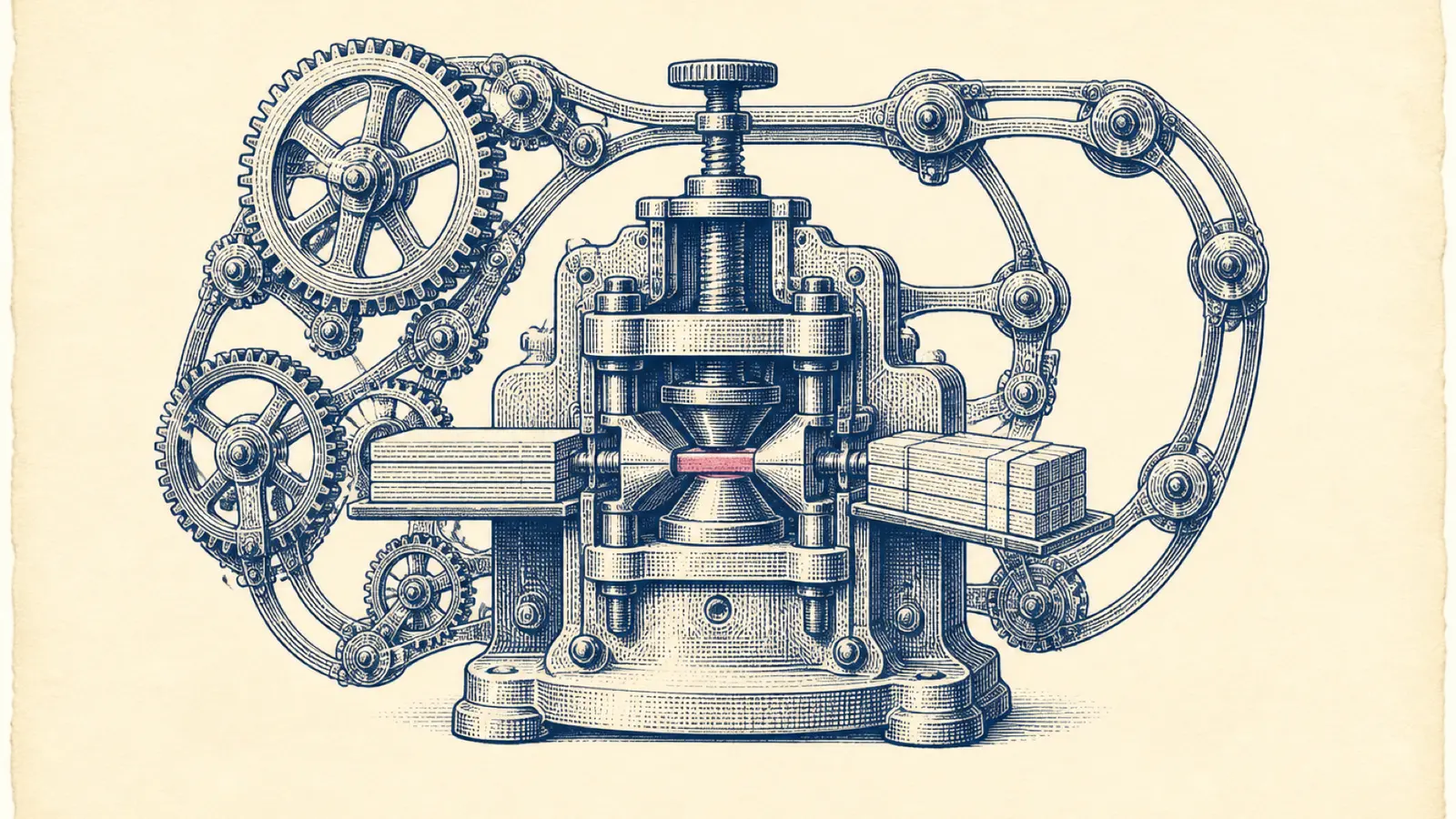
Many engineering organizations operate under the misconception that production data transformation always requires provisioning distributed clusters or multi-node cloud data warehouses. In practice, for sub-terabyte workloads, running distributed frameworks introduces cluster startup delays, network shuffling, and minimum compute costs that generate far more operational friction than the data volume justifies.
The Operational Friction of Distributed Clusters
When teams deploy distributed compute clusters for moderate data volumes, operational complexity multiplies. Provisioning worker nodes, coordinating memory partitions across a network, and debugging distributed execution graphs consume significant engineering hours. Furthermore, with the rise of real-time streaming ingestion and micro-batch writes into open lakehouse tables, organizations frequently encounter small file explosions and metadata bloat, leading to performance degradation and unpredictable cloud compute bills.
Distributed compute engines like Apache Spark or large cloud data warehouses were built to process massive multi-terabyte datasets across hundreds of machines. Applying that operational overhead to smaller, single-node tasks burdens teams with infrastructure maintenance instead of data delivery.
The Modern In-Process Embedded Engine Stack
To address this friction, startups and scale-ups are increasingly bypassing heavy distributed compute clusters (such as large Spark deployments or expensive cloud warehouses) for modular, clusterless in-process engines like DuckDB, Polars, and Daft. Paired with columnar formats like Apache Arrow and Parquet, this modern embedded stack enables high-throughput local data transformations, fast analytics, and multimodal AI preprocessing at a fraction of traditional infrastructure overhead and compute costs.
In-process engines execute directly inside application runtimes, scheduled jobs, or lightweight container tasks. This architectural shift turns distributed infrastructure problems back into local code problems that can be developed, tested, and debugged on a single workstation. While in-process analytics engines are constrained by single-node RAM and CPU limits, integrations with Ray or Daft provide scaling vectors for distributed workloads when memory limits are exceeded.
Lakehouse Standardization: Apache Iceberg and Open REST Catalogs
Adopting an in-process engine architecture does not mean sacrificing centralized storage, shared metadata, or access governance. The table format debate has largely stabilized around Apache Iceberg across major cloud platforms (AWS, Snowflake, Databricks, Google Cloud), moving the primary battleground and architectural innovation to open REST catalog standards.
With Apache Polaris graduating to an Apache Top-Level Project (TLP) and Databricks donating the open-source Unity Catalog to the Linux Foundation AI & Data, startups and scale-ups adopt vendor-neutral REST catalogs to ensure multi-engine interoperability, unified role-based access control (RBAC), and credential vending without cloud lock-in.
Feature disparities persist between self-hosted open-source catalog engines and fully managed commercial enterprise control planes, particularly around automated lineage visualization and managed user interfaces.
To support this open architecture, data platforms treat automated table maintenance (continuous compaction, clustering, snapshot expiration, and deletion vector management) as an essential platform service rather than a manual tuning task. Platform services handle these optimizations to prevent metadata bloat and small-file fragmentation. Because autonomous optimization tasks consume background compute resources, engineering teams must implement smart scheduling to balance query performance gains against maintenance costs.
Shifting Pipeline Reliability Upstream via Data Contracts
Clusterless architectures depend on reliable, well-structured source data. Data teams in startups and scale-ups are increasingly moving data reliability upstream via data contracts as code. Standardized by specifications such as the Open Data Contract Standard (ODCS) under the Linux Foundation AI & Data (Bitol project), data contracts are codified in YAML, versioned in Git, and executed in CI/CD pipelines (e.g., via CLI linters and pull-request checks).
By executing checks during continuous integration, teams prevent breaking schema changes, type mismatches, and semantic drift before corrupting downstream production pipelines or AI models. Adopting data contracts requires cross-functional buy-in and organizational discipline between upstream software engineers and downstream data teams, as tooling and framework adoption is ongoing.
Active Metadata and Governed Semantic Layers for AI Readiness
Industry research indicates that a majority of enterprise and scale-up generative AI initiatives face delays or abandonment due to poor data quality, lack of context, and data silos. To ensure AI/ML readiness, startups are implementing active metadata layers, automated data observability, and centralized semantic layers (e.g., dbt Semantic Layer, Cube, Atlan).
These governed semantic layers serve dual clients: human business intelligence consumers and autonomous agentic AI systems requiring deterministic context, freshness guarantees, and row-level governance. Building and maintaining unified semantic models across legacy and fragmented operational databases requires dedicated domain ownership and ongoing governance.
Aeolus Data Solutions view. Aeolus Data Solutions builds and advises on data platforms, pipelines, and AI/ML data readiness. Distributed compute clusters should serve as a secondary scaling vector rather than the default starting point for analytical pipelines. By pairing in-process engines like DuckDB, Polars, and Daft with Apache Iceberg, open REST catalogs, and Git-versioned data contracts, engineering teams eliminate cluster overhead while preserving clean scaling pathways.
Evaluating In-Process Architectures
Engineering teams do not need distributed clusters to achieve high-throughput data processing on moderate datasets. Shifting sub-terabyte pipelines to embedded engines, open table formats, and proactive CI/CD validation simplifies operations and controls cloud infrastructure expenses.
Aeolus Data Solutions builds and advises on data platforms, pipelines, and AI/ML data readiness. If your organization is evaluating in-process analytics engines, open table formats, or data reliability strategies, reach out to start a conversation with Aeolus Data Solutions.
Want a second opinion on your data stack?
Every Aeolus engagement starts with a fixed-fee data & AI-readiness audit — a short, low-risk first step before any larger build.
Book a data & AI-readiness audit