Engineering
Passive Alerting Fails in AI Stacks: Why Data Pipelines Need Automated Circuit Breakers
Why passive observability and Slack alerts fail in automated AI architectures, and how engineering teams implement fail-closed circuit breakers, data contracts, and isolated quarantine partitions to prevent data corruption.
September 8, 2026 · Engineering · Leon Liang
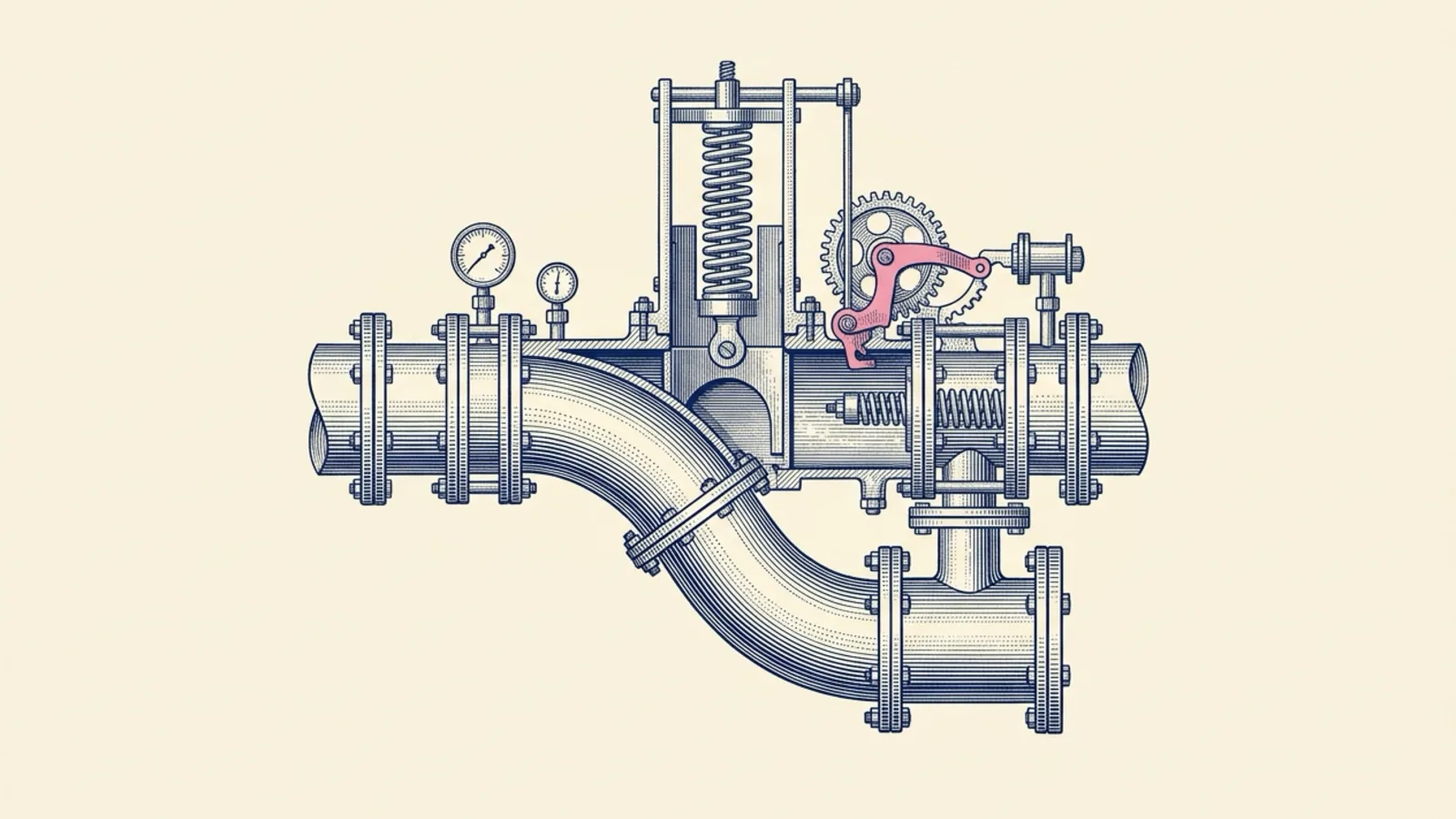
A frequent misconception in data engineering is that passive observability dashboards and Slack notifications provide adequate protection against data downtime. In reality, passive notifications arrive only after corrupted records have already entered production storage. Once bad data reaches a vector store or an LLM context window, downstream agent actions cannot be undone through post-incident triage. High-reliability architectures require moving from passive alerting to transactional, fail-closed circuit breakers that isolate corrupted records before downstream consumption.
The Latency Penalty of Passive Alerting in AI Pipelines
Traditional data quality workflows rely on post-hoc observability tools to send alerts to on-call channels when anomalies occur. Enterprise pipeline health research, such as the Monte Carlo State of Data Quality, shows that data downtime affects roughly 31% of revenue across organizations. Data teams face approximately 67 incidents per month, with an average mean time to resolution (MTTR) of 15 hours.
In human-facing dashboard environments, an unassigned alert sitting in a queue for 15 hours causes delayed reports. In automated AI pipelines and decision systems, that same delay creates compounding failures. If an unvalidated schema change or bad data batch is written to storage, generative AI platforms immediately retrieve and embed the corrupted records. Because forensic triage cannot reverse automated decisions already executed by downstream models, platforms are integrating automated anomaly detection, field-level lineage, and automated pipeline circuit breakers to intercept bad data before it pollutes retrieval-augmented generation (RAG) vectors and machine learning training datasets. Observability tools detect anomalies and halt pipelines, but resolving semantic and upstream transactional errors still requires developer triage and automated reconciliation logic.
Upstream Schema Enforcement with Machine-Readable Data Contracts
Preventing contaminated records from reaching production storage requires moving validation directly to producer boundaries. Data engineering teams have standardized on the Open Data Contract Standard (ODCS) under Bitol, which is hosted by the Linux Foundation AI & Data.
ODCS provides a YAML-based specification for defining schemas, data quality rules, property relationships, and executable service level agreements (SLAs) between data producers and consumers. This standard enables automated schema validation and contract enforcement in continuous integration and continuous delivery (CI/CD) pipelines through tools like Data Contract CLI. By executing contract checks before ingestion, teams prevent silent upstream schema breaks from disrupting downstream pipelines and analytics. Enforcing data contracts requires cross-functional alignment between upstream application developers and downstream data or machine learning engineers. Without automated CI checks, contracts risk remaining static documentation.
Shift-Left Transformation Gates with Model Contracts and Unit Tests
Within data transformation layers, developer-centric quality gates guarantee structural integrity and logic validity before production builds execute. dbt Labs incorporated native unit tests and model contracts into its transformation framework.
Native unit tests allow deterministic SQL logic testing using static mock inputs in isolation without requiring live warehouse state. Model contracts enforce column names, data types, and constraints at model compilation and build time. These mechanisms eliminate broken downstream tables and protect production pipelines from silent transformation logic bugs. During early exploratory prototyping before schemas stabilize, teams must note that over-constraining models with contracts can slow iteration velocity.
Engine-Agnostic Iceberg REST Catalogs for Isolation
At the storage layer, open table formats have converged toward Apache Iceberg, shifting platform governance to the catalog layer. Apache Polaris, open-sourced by Snowflake and graduated as an Apache Software Foundation project, alongside open Unity Catalog implementations, provides an engine-agnostic Iceberg REST API catalog.
This architecture enables startups and scale-ups to decouple compute engines like Apache Spark, Trino, Apache Flink, and DuckDB from proprietary storage. This decoupling prevents vendor lock-in and allows interoperable querying across multi-cloud environments. Engineering teams should note that managed implementations, such as Snowflake Open Catalog compared to Databricks Unity Catalog, may still retain platform-specific features like proprietary governance or fine-grained engine optimizations that are not fully ported to standalone open-source deployments.
Fast CI Validation Using Embedded Columnar Engines
To run deterministic pipeline verification without incurring high infrastructure costs, startups and scale-ups are bypassing the infrastructure complexity and idle compute costs of massive distributed data warehouses for sub-petabyte analytics. Instead, teams are adopting embedded and serverless engines like DuckDB and MotherDuck.
DuckDB and MotherDuck use in-process columnar execution, zero-copy querying over Parquet and Iceberg tables in object storage, and isolated serverless compute instances (“ducklings”). This design enables sub-second query performance and streamlined CI/CD data testing at a fraction of traditional modern data stack overhead. When workloads scale to highly concurrent write operations or multi-petabyte distributed joins, teams still require distributed engines or lakehouse query federation architectures.
Implementing Fail-Closed Runtime Prevention
The transition from passive alerting to active prevention requires designing pipelines that fail closed rather than failing open. When incoming data violates an ODCS contract, fails a compile-time constraint, or triggers an anomaly detector, the pipeline must automatically route the batch to a quarantine partition or halt the ingestion buffer.
Aeolus Data Solutions view. Aeolus Data Solutions builds and advises on data platforms, pipelines, and AI/ML data readiness. Aeolus Data Solutions is not a cloud provider, auditor, certification body, or model vendor. In production environments, passive alert notifications create an operational bottleneck because human triage cannot match the speed of automated AI consumption. Aeolus Data Solutions advocates for shift-left data contracts, automated pipeline circuit breakers, and catalog-level isolation as mandatory standards for reliable data systems.
If engineering teams are evaluating pipeline reliability, automated quarantine architectures, or Iceberg REST catalog implementations, reach out to start a technical conversation with Aeolus Data Solutions.
Want a second opinion on your data stack?
Every Aeolus engagement starts with a fixed-fee data & AI-readiness audit — a short, low-risk first step before any larger build.
Book a data & AI-readiness audit