Perspective
The Agentic CDC Torn State Trap: Why Millisecond Freshness Breaks Autonomous AI Context
Pushing sub-minute streaming CDC into multi-table AI contexts creates temporal state shredding. Deterministic snapshot isolation, not hyper-fresh torn reads, makes autonomous agents reliable.
September 14, 2026 · Perspective · Leon Liang
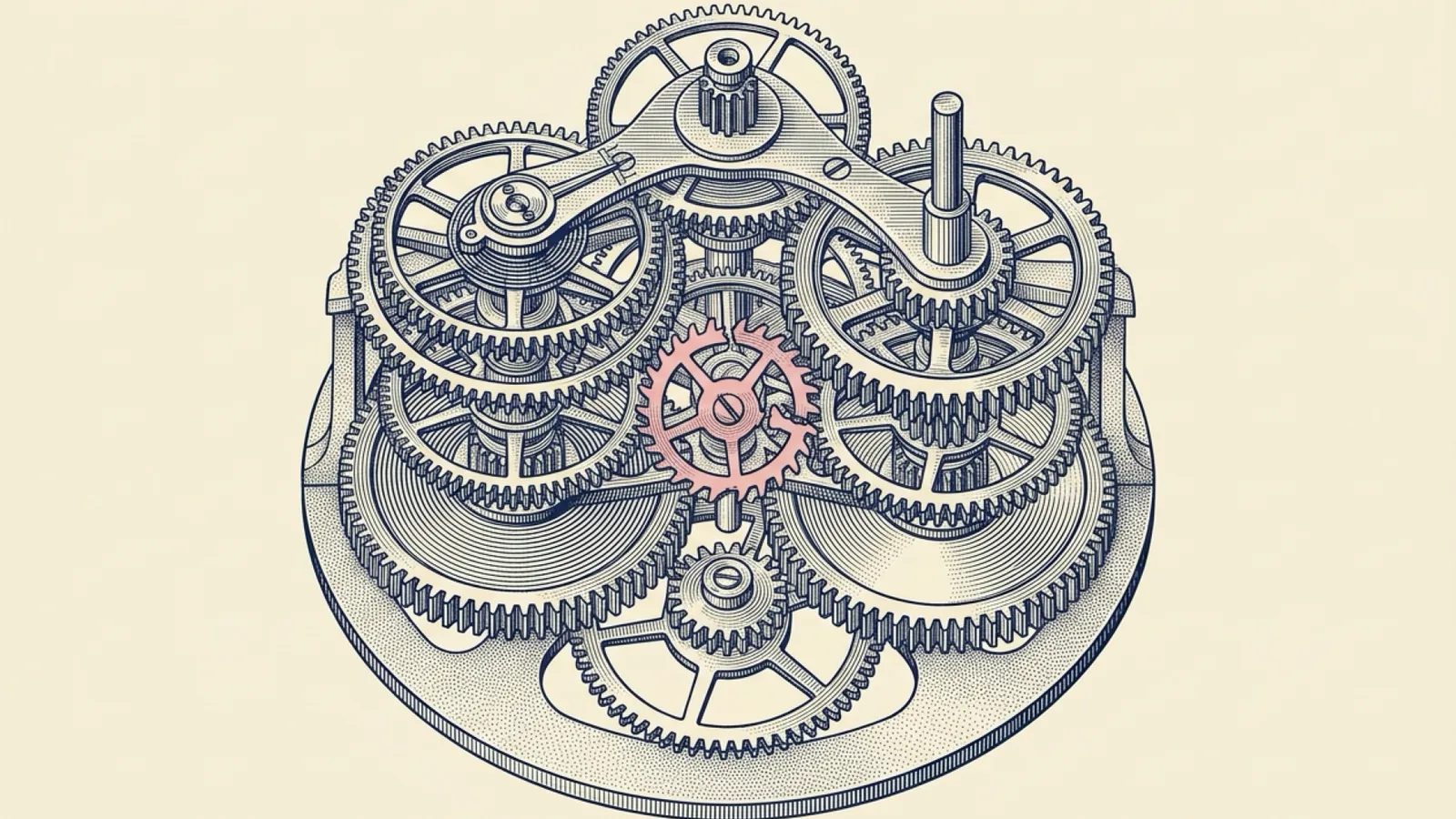
A common misconception in AI architecture suggests that autonomous AI agents require sub-60-second streaming Change Data Capture (CDC) to reason accurately and avoid hallucinations. The correction is that pushing uncoordinated sub-minute streaming updates into multi-table agent contexts creates temporal state shredding, where agents query intermediate, uncommitted states mid-transaction across related tables. Autonomous agents do not fail because data is several minutes old; autonomous agents fail when context retrieval observes torn reads that violate multi-table transactional consistency.
The Pitch for Agentic CDC and Its Hidden Failure Mode
Real-time Change Data Capture vendors argue that autonomous decision-making demands streaming data freshness. Under this framing, termed “Agentic CDC,” context engineering pipelines must ingest every database mutation within seconds to prevent agent hallucination and stale execution. However, real-time streaming and CDC architectures incur higher compute and operational complexity compared to standard micro-batch pipelines.
More significantly, sub-minute ingestion introduces a severe transactional problem when autonomous agents execute multi-table context retrieval. Business entities rarely reside in a single table. An e-commerce purchase, a credit risk assessment, or an inventory allocation spans orders, payments, accounts, inventory, and ledger tables. When an operational database commits a transaction across multiple tables, replication streams capture those mutations as separate asynchronous events.
When an agent queries the lakehouse or analytical store while those stream events are landing independently, the agent reads one table after its update, but another table before its corresponding update. The agent observes an intermediate state that never existed in the source database.
Temporal State Shredding: How Torn Reads Break Agent Reasoning
Temporal state shredding occurs when an autonomous agent executes vector or structured context retrieval against tables updated out of synchronization. For human analytics, an inconsistent dashboard read during an ingestion window might result in a brief visual glitch. For an autonomous agent executing action loops, torn state leads to incorrect automated actions.
Consider an autonomous refunds agent. An order cancellation arrives alongside a ledger debit and an inventory restock. If the CDC pipeline commits the inventory restock at second 12, the order status update at second 18, and the ledger debit at second 35, an agent querying context at second 20 observes a cancelled order status without the corresponding ledger debit. The agent reasons that the refund was never initiated, triggers a duplicate payout, and commits the action via API.
The agent did not hallucinate because of poor prompt engineering or inadequate model reasoning. The agent acted rationally on torn, hyper-fresh data.
Why Stale Consistency Beats Hyper-Fresh Instability
A fundamental trade-off exists between data freshness and transactional consistency. In distributed systems, deterministic multi-table snapshot isolation guarantees that a reader observes a single, point-in-time consistent view across all queried datasets.
Stale, consistent data produces reliable agent decisions. If an agent queries a table snapshot that is fifteen minutes old, every table reflects the state of the business at that exact snapshot timestamp. The agent reaches an accurate conclusion based on that verified point in time. Conversely, hyper-fresh, torn data produces confident, catastrophic actions.
When data engineering prioritizes sub-minute ingestion over multi-table transaction boundaries, data platforms pass transactional coordination burdens directly to the language model. Language models cannot reconstruct distributed database invariants from fragmented prompts.
The Trust and Downtime Reality in Enterprise AI
Data quality failures already impose massive operational overhead on modern organizations. Organizations experience an average of 67 monthly data downtime incidents, with Mean Time to Resolution (MTTR) averaging 15 hours. Furthermore, poor data quality directly affects approximately 31% of revenue. For AI and machine learning readiness, approximately two out of three data leaders state that they lack complete trust in the upstream data powering their models.
Compounding this challenge, Gartner research projects that through 2026, 60% of enterprise AI initiatives will be abandoned due to a lack of AI-ready data. Unstructured data represents 80% to 90% of enterprise information, presenting a primary bottleneck that makes active metadata classification, lineage, and domain curation mandatory for production RAG and agentic AI. Introducing uncoordinated streaming CDC into production agents exacerbates trust deficits by multiplying untraceable point-in-time anomalies.
LakeOps and Deterministic Snapshot Isolation with Apache Iceberg
To prevent temporal state shredding, data platform architecture is moving toward LakeOps and open table standards. Apache Iceberg has emerged as the de facto open table standard across modern data stacks, backed natively by major cloud platforms. With Iceberg v3 introducing deletion vectors and native row lineage for CDC, industry focus has shifted from table format debates to LakeOps and open catalog standards such as Apache Polaris and open Unity Catalog.
Rather than querying raw streaming landing zones, autonomous agents should query deterministic Iceberg snapshots exposed through unified catalogs. By pinning agent context retrieval to specific snapshot IDs, data platforms guarantee point-in-time isolation across tables. When the agent completes its reasoning loop, every retrieved record originates from an identical, transactionally consistent commit.
Shift-Left Data Contracts for Agent Context Safety
Ensuring consistency across multi-table agent contexts requires preventative governance at the ingestion boundary. Data engineering has shifted from reactive downstream alerting to proactive prevention via machine-readable Data Contracts. Implemented as CI/CD schema verification gates and automated SLA monitors, standards like dbt Model Contracts and OpenDataContract standards prevent upstream breaking changes from corrupting downstream analytical and AI/ML pipelines.
When integrated into agent context pipelines, data contracts define not only schema types, but also cross-table synchronization SLAs. If an ingestion stream falls behind on one table, circuit breakers isolate downstream agent context until all dependent tables reach a synchronized snapshot.
Designing Data Platforms for Autonomous AI
Building data architectures for autonomous agents requires separating ingestion pipelines from agent context serving:
- Ingest via CDC into staging tables while decoupling raw stream events from consumer-facing agent queries.
- Publish coordinated multi-table snapshots using open formats like Apache Iceberg.
- Enforce machine-readable data contracts to validate cross-table synchronization before exposing snapshots to agent retrieval tools.
- Pin agent reasoning sessions to verified snapshot IDs to enable deterministic context reconstruction during incident investigations.
Aeolus Data Solutions view. Autonomous AI execution does not fail because data is five minutes old; autonomous AI execution fails when context queries observe an incomplete state across related tables. Data platforms must prioritize multi-table snapshot isolation and LakeOps discipline over raw ingestion latency.
Next Steps for Agentic Data Engineering
Autonomous agents represent a major shift in how organizations query and act on data. Ensuring reliable agent execution requires establishing deterministic data foundations before accelerating streaming speed.
If your engineering team is evaluating Agentic CDC or designing data architectures for autonomous agents, Aeolus Data Solutions welcomes the opportunity to discuss deterministic snapshot isolation, LakeOps, and reliable AI data readiness.
Want a second opinion on your data stack?
Every Aeolus engagement starts with a fixed-fee data & AI-readiness audit — a short, low-risk first step before any larger build.
Book a data & AI-readiness audit